tickets-header tickets-mobile-header

Tickets & Events

The season opens in ceremonial style with majestic fanfare, setting the stage for Rachmaninoff's Piano Concerto No. 3, a work of such monumental scale and virtuosity that it was once thought impossible to perform. La Mer completes the program with an atmospheric portrayal of the sea, exploring its shimmering beauty and immense power.      

Program

DUKAS

Fanfare from La Péri

plus

Paul Dukas' 1912 ballet in one act, La Péri, is based on a Persian folktale. Iskender, an aged king, steals the magic Flower of Immortality from the hands of the sleeping Péri, a beautiful winged fairylike creature. Immediately, Iskender is filled with the vitality of youth, and consumed with earthly material desires. He falls in love with Péri. Performing a dance which brings her gradually closer, Péri is able to take back the lotus flower. As she returns to Paradise, the calm Iskender is left to die.

Scored for majestic brass choir, the Fanfare pour précéder la péri is heard before the curtain rises. Dukas composed it at the last minute, perhaps with the intention of quieting the audience. Now, the Fanfare is heard frequently as a celebratory concert opener. It grabs our attention with a bold antiphonal dialogue. The second section begins with a noble and aspiring theme, introduced by the horns. The Fanfare concludes with a sweeping trumpet flourish.

A close friend and classmate of Debussy, Paul Dukas (1865-1935) was a professor at the Paris Conservatory. A ruthless self-critic, he destroyed many of his works. In addition to the Fanfare, Dukas is remembered for his enchanting orchestral scherzo, The Sorcerer's Apprentice, popularized by the 1940 Disney film Fantasia.

RACHMANINOFF

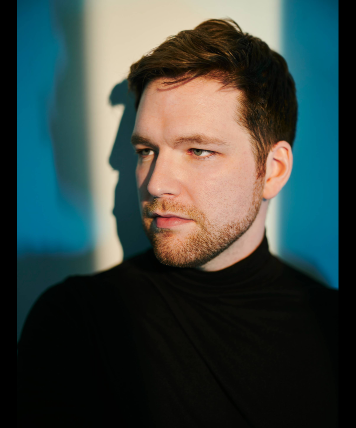
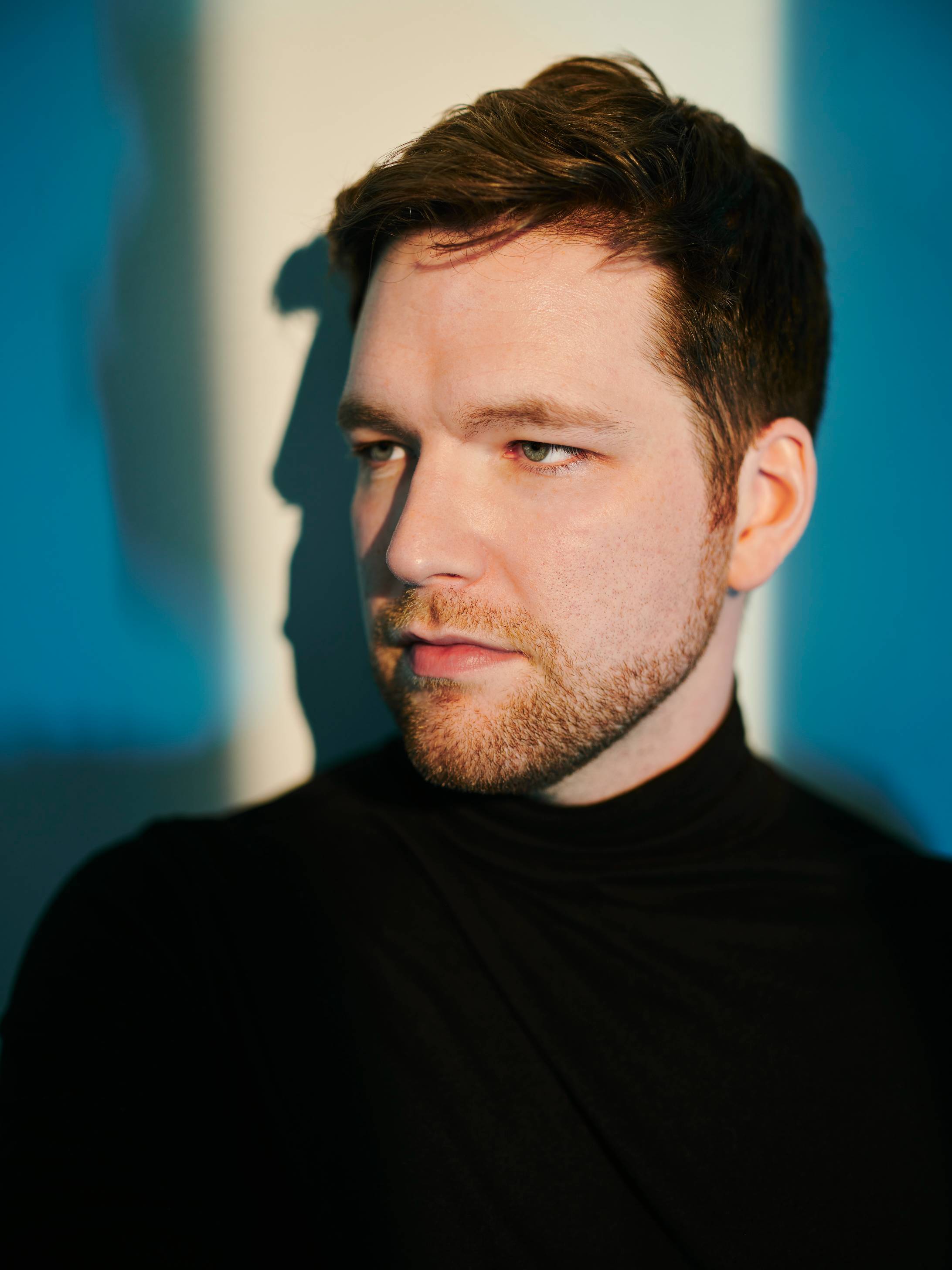
Piano Concerto No. 3, featuring guest artist Brian Woods

plus

Sergei Rachmaninoff's Piano Concerto No. 3 in D minor, Op. 30 has been called "the Everest of piano concertos."

Rachmaninoff composed it during the summer of 1909 at Ivanovka, his estate in the steppes of southern Russia, before embarking on his lucrative first American concert tour. Without time to properly learn the solo part, the composer practiced on a "silent keyboard" during the trans-Atlantic voyage. He performed it, first with Walter Damrosch and the New York Symphony, and then at Carnegie Hall with Gustav Mahler conducting. An early review noted that the composition's "great length and extreme difficulties bar it from performance by any but pianists of exceptional technical powers."

Pianist Gary Graffman lamented that he had not learned the Concerto as a student, when he was "still too young to know fear." The work's Herculean demands loom large in the 1996 biographical film, Shine, in which Australian concert pianist David Helfgott suffers a mental breakdown while attempting to master it. Józef Hofmann, the respected Polish-American pianist to whom the Concerto was dedicated, declined to play it. In the 1920s, Vladimir Horowitz championed the work, and made the first recording in 1930 with Albert Coates and the London Symphony Orchestra. After hearing his muscular performance, Rachmaninoff said that Horowitz "swallowed it whole." The Concerto was adapted into the standard repertoire after Van Cliburn presented it to great acclaim at the 1958 Tchaikovsky Competition in Moscow.

In the opening two bars of the first movement (Allegro ma non tanto), the clarinet, bassoon, horn, timpani, and muted strings set the stage with a sense of quiet melancholy. Restless dotted rhythms open the door to the mysterious, winding first theme, presented by the piano. Developing organically in brief, stepwise fragments, the theme forms the seed out of which the entire Concerto develops. Motivic offshoots of the expansive theme emerge and develop in the other moments. There are echoes of ancient Russian Orthodox chant. In the 1940s, musicologist Joseph Yasser pointed out similarities between the theme,
and the liturgical chant, Thy Tomb, O Savior.

Regarding the theme, Rachmaninoff said, "It simply wrote itself! I wanted to ‘sing’ a tune on the piano like a singer does and find an appropriate orchestral accompaniment, that is, one that would not drown this ‘song.’ That’s all! Just the same, I find that, against my will, this theme does take on a songlike or familiar quality."

As the orchestra takes over the theme, a torrent of embellishing variations flow from the piano. The passionate second theme arrives with a sense of inevitability. Instrumental voices throughout the orchestra join in sensuous counterpoint with the piano. Rachmaninoff composed two alternate cadenzas for this movement. One is a 75 measure long tour de force, filled with powerful chords. (This is what we hear in Vladimir Ashkenazy's 1975 recording, below). In performances, the composer opted for a shorter cadenza. Following the cadenza's glittering fireworks, the orchestra slips in unobtrusively, with plaintive statements of the theme emerging in a succession of solo wind voices, beginning with the flute. 

Moving to the remote key of D-flat, the second movement (Intermezzo. Adagio) begins with a poignant melody, introduced by the oboe, and developed lushly by the strings. The movement unfolds as a series of variations on the theme. The orchestra and solo piano are heard as equal partners in a tender conversation. With motivic echoes of the first movement's opening theme rising in the clarinet and bassoon, the middle section brings a buoyant waltz in 3/8 time. The sudden interruption pays homage to a similar moment in the slow movement of Tchaikovsky's Piano Concerto No. 1. 

Without pause, the piano's spirited cadenza leads to the final movement (Finale. Alla breve). The music launches forward with a bravura and dazzling virtuosity. Motifs from the first movement return to bring the Concerto full circle. As the coda marches to its triumphant conclusion, the home key of D minor is transformed into blazing D major. Rachmaninoff's rhythmic four-note signature punctuates the life-affirming final cadence.
DEBUSSY

La Mer

plus

Claude Debussy's La Mer ("The Sea") is not a literal portrait of the ocean. There is no "program" or story, as we might hear in Beethoven's "Pastoral" Symphony or a Strauss tone poem. Instead, La Mer takes us deep into the world of atmosphere, metaphor and synesthesia (a blurring of senses). Shimmering colors, the play of light on water, and a vivid sense of motion blend together to form a magical, ever-changing soundscape. As with the sea, La Mer runs the cosmic gamut from serene tranquility to terrifying, awe-inspiring power.

Debussy finished the work, which he subtitled "Three Symphonic Sketches," in March, 1905 at the Grand Hotel at Eastbourne on the coast of the English Channel—a location he described to his publisher as "a charming peaceful spot: the sea unfurls itself with an utterly British correctness." But most of the composition was done far from water. In a published review of Beethoven's "Pastoral" Symphony, the composer wrote that music should, "not attempt at direct imitation, but rather [capture] the invisible sentiments of nature." He drew more inspiration from depictions of the sea in paintings and literature than from actual salt water. For the cover of the score, he chose The Great Wave, a woodblock print by the Japanese artist, Katsushika Hokusai (1760-1849) which influenced French painters such as Monet. Debussy called distant childhood memories of summers spent by the Mediterranean at Cannes, "worth more than reality."

La Mer is filled with this sense of the intangible and ephemeral. We experience this music as a vast, gradually-unfolding musical stream of consciousness in which motives evolve with an organic, self-organizing perfection. All of this suggests an inherent lack of formal structure. Yet, in his book, Debussy in Proportion, the musicologist Roy Howat shows that, perhaps unbeknownst to the composer, La Mer's sections adhere to the exact mathematical ratios of the Golden Section. The author Jean Barraque described this "openness" of form as a "sonorous becoming... a developmental process in which the very notions of exposition and development coexist in an uninterrupted burst. "We hear the Eastern sounds of the Javanese Gamelan which had captivated Parisians at the 1889 Paris Exposition. Instead of moving towards a far-off goal, this is music which is always arriving at an eternal present. This is largely the result of the underlying harmony. Instead of the gravitational "pull" of a conventional major or minor scale, this music floats into the much different world of the whole tone and pentatonic scales. In many ways, this music still sounds "modern" over a hundred years later. Perhaps it isn't surprising that the first audience left the concert hall baffled and unable to fully grasp this revolutionary and transformative music, written by one of music history's greatest rule-breakers. 

The first movement, "From dawn to noon on the sea" gradually awakens, emerging out of mysterious, dark, icy depths. One of La Mer's most prominent motives is announced by the unique voice of the muted trumpet combined with the English horn (beginning around the 0:48 mark). This is only one of many voices, each with its distinct persona, which comes alive throughout this piece. This opening fades into a vivacious theme, introduced by a choir of cellos, divided into parts. Rising, suddenly, out of a moment of eerie calm, a majestic brass chorale brings the first movement to a close.

The second movement, "Play of the Waves" is an effervescent scherzo, filled with playful splashes of color and light. In this extraordinary passage, listen to the way the music works itself up into a frenzy of euphoria, eventually going one step too far and tumbling back to earth. All of this exuberant fun fades into an expansive sonic vista of serene majesty at the end of the movement. Debussy's biographer Oscar Thompson offers this poetic description of the music: "a world of sheer fantasy, of strange visions and eerie voices, a mirage of sight and equally a mirage of sound. On the sea's vast stage is presented trance-like phantasmagoria so evanescent and fugitive that it leaves behind only the vagueness of a dream."

The final movement, "Dialogue of the wind and the sea," evokes awe and terror. We're confronted with an ominous power as the motives from the first movement return. There is a distant echo of that majestic chorale from the end of the first movement. Then, perhaps for the first time in the entire piece, we arrive at a decisive tonal center in D-flat major. What begins as a quietly haunting melody in the woodwinds grows into a passionate statement in the strings. In its final moments, La Mer gives us a glimpse of ultimate, transcendent majesty, simultaneously triumphant and sensuously beautiful.

Concert Sponsor